
You walk over it, park on it, spill stuff on it, then forget about it.
And then one day the driveway looks… tired. Not “a little dusty” tired. More like “why does it look damp when it hasn’t rained in a week?” tired.
That’s not your imagination. Driveways telegraph problems long before they become repairs.
If you’re waiting until it looks terrible, you’re already late.
I’m not saying you need to pressure wash like it’s a weekly ritual. But the best time to clean a driveway is when it starts whispering, not when it’s screaming. If you’re wondering What Is Pressure Washing?, it’s simply a powerful way to remove the buildup before it turns into bigger damage.
Here’s the thing: most of the ugly stuff is also the destructive stuff. Oil softens binders, algae holds moisture, grime acts like sandpaper under tires. The “cosmetic” problems aren’t purely cosmetic.
One line to remember:
A dirty driveway often stays wetter longer.
The three signals I trust (and the ones I don’t)
Some discoloration is harmless. Some is a warning label.
The signals that actually matter
– Oil or grease that doesn’t fade after sun and a hose rinse: that’s contamination, not just a spot.
– Green growth in seams or shaded edges: algae and moss are basically moisture indicators with attitude.
– Dull gray film that never really rinses away: embedded dirt, often mixed with fines, that slowly roughens the surface.
The signals people overreact to
Faint tire marks. Light dust after a dry week. A single rust bloom that appeared overnight from a lawn tool. Those aren’t emergencies; they’re reminders.
Now, this won’t apply to everyone, but if you’re in a humid climate or your driveway sits in shade most of the day, biological growth will show up faster and return faster. It’s not because you’re “not cleaning enough.” It’s because your site conditions are basically a greenhouse.
Material matters more than nozzle choice (yes, really)
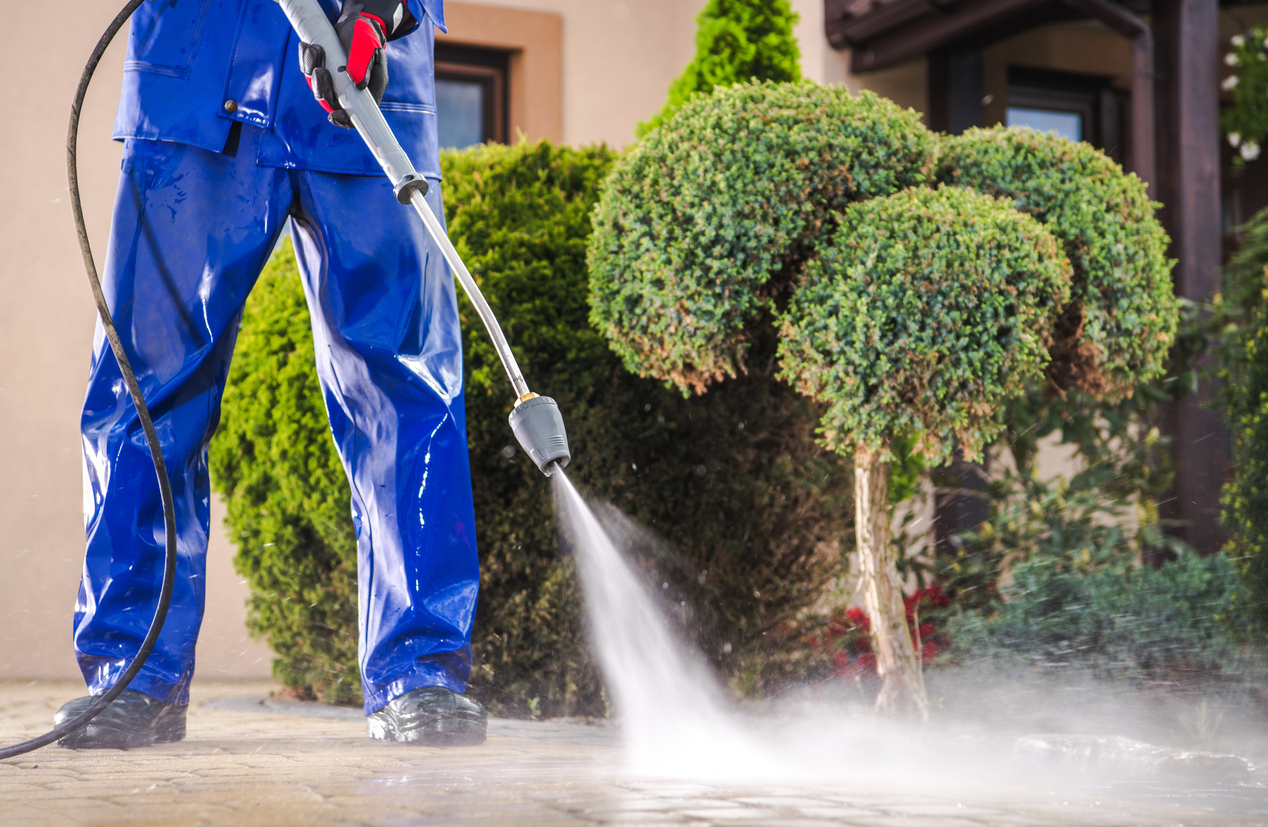
People obsess over PSI like it’s the only variable. It isn’t. Surface type, porosity, temperature, and jointing matter just as much.
Concrete
Concrete can take higher pressure than most surfaces, but it’s not invincible. I’ve seen perfectly good slabs turned into zebra-striped messes from a wand held too close. Keep your distance, keep your passes even, and don’t linger.
Cold-weather caveat: blasting concrete with hot water when temperatures are flirting with freezing can push water into microcracks and make spalling more likely later. That “later” is usually spring.
Asphalt
Asphalt is the gentle one. High pressure can etch it, dislodge aggregate, and leave it looking fuzzy. Use lower pressure, wider tips, and don’t treat stains like a personal insult.
Pavers (and anything jointed)
Pavers clean up beautifully, but they punish impatience. Pressure can blow out joint sand, shift edges, and create low spots that collect water. If you’ve got polymeric sand, treat it like a finished component, not dirt.
Brick + mortar
Brick itself is durable. Mortar is the weak link. High-velocity jets can chew joints faster than you think, especially on older installations. Test a small area first (annoying advice, but it saves you).
Metal edging and decorative bits? Keep chemicals mild and spray indirectly. Corrosion is sneaky.
Prep: the boring step that keeps you from wrecking something
Look, I love efficiency. I still prep.
A quick pre-check prevents the classic mistakes: killing plants with runoff, forcing water into gaps, or blasting grime onto your garage door.
Do this, then wash:
– Move vehicles and anything that will trap dirty water (planters, bins, outdoor rugs).
– Cover sensitive plants if you’re using detergent; rinse them before and after.
– Pick the right tip: a 25-degree nozzle is a safe starting point for most driveways; turbo nozzles are effective but easy to overdo on seams and edges.
– Test a small patch in a low-visibility spot. Always.Especially on decorative concrete or dyed pavers.
When can you skip prep? If you’re doing a light rinse-only cleanup on a sealed surface and you’re not using chemicals. Even then, I wouldn’t skip checking your water supply and hose connections. A starving pump ruins your day.
Choosing a method: stop “blasting,” start “matching”
A driveway isn’t a grill grate. You’re not trying to annihilate it.
Light soil (dust, mild film, seasonal grime)
Use a surface cleaner at low-to-moderate pressure and keep a consistent walking speed. Surface cleaners reduce striping because they distribute pressure evenly. That’s the point.
Oil stains and dark patches
Don’t expect pressure alone to “erase” oil. It drives deeper before it lifts.
In my experience, the best results come from:
1) Degreaser (applied per label),
2) Dwell time (don’t let it dry),
3) Agitation with a stiff brush,
4) Rinse with controlled pressure.
If the stain is old, you may only lighten it. That’s reality, not failure.
Algae, mold, lichens
These love shade and lingering moisture. Pressure will remove surface growth, but if you don’t address the root conditions, it returns. Improve drainage if possible, trim back shade, and choose cleaners that don’t torch your landscaping.
One technical note: According to the U.S. EPA, residential stormwater runoff is a major pathway for pollutants into local waterways, including soaps, oils, and sediment (U.S. Environmental Protection Agency, Stormwater Runoff). That’s why I’m picky about detergents and why “just rinse it into the street” is a bad habit.
Post-wash care: where the real longevity comes from
Most people stop when it looks clean. That’s the easiest moment to waste the effort.
If your driveway material supports sealing, sealing is how you slow down re-staining and moisture intrusion. It’s also how you reduce that “permanently dusty” look.
A few practical takes (not gospel, just what I’ve seen work):
– Concrete: water-based sealers tend to look more natural and are less prone to peeling when applied correctly. Follow cure times; impatience clouds finishes.
– Pavers: don’t seal until joints are stable and the surface is dry enough. Trapped moisture under sealer looks awful and can turn into haze.
– Cracks and joints: clean them out after washing, then repair/fill as appropriate. Water loves an open invitation.
Re-seal schedules vary, but 2, 5 years is a common range depending on traffic, sun exposure, and product quality. If you’re power-washing aggressively every season, you’ll shorten that window.
A slightly opinionated final note
Pressure washing is a tool, not a personality.
Use enough force to clean, not enough to prove you own a machine. When you match method to material, prep like you mean it, and seal when it makes sense, you don’t just get a nicer driveway, you avoid the quiet damage that shows up later as cracks, shifting, and surface failure.